
Maximizing Unmetered Bandwidth: High-Traffic Streaming and Media Delivery on a VPS
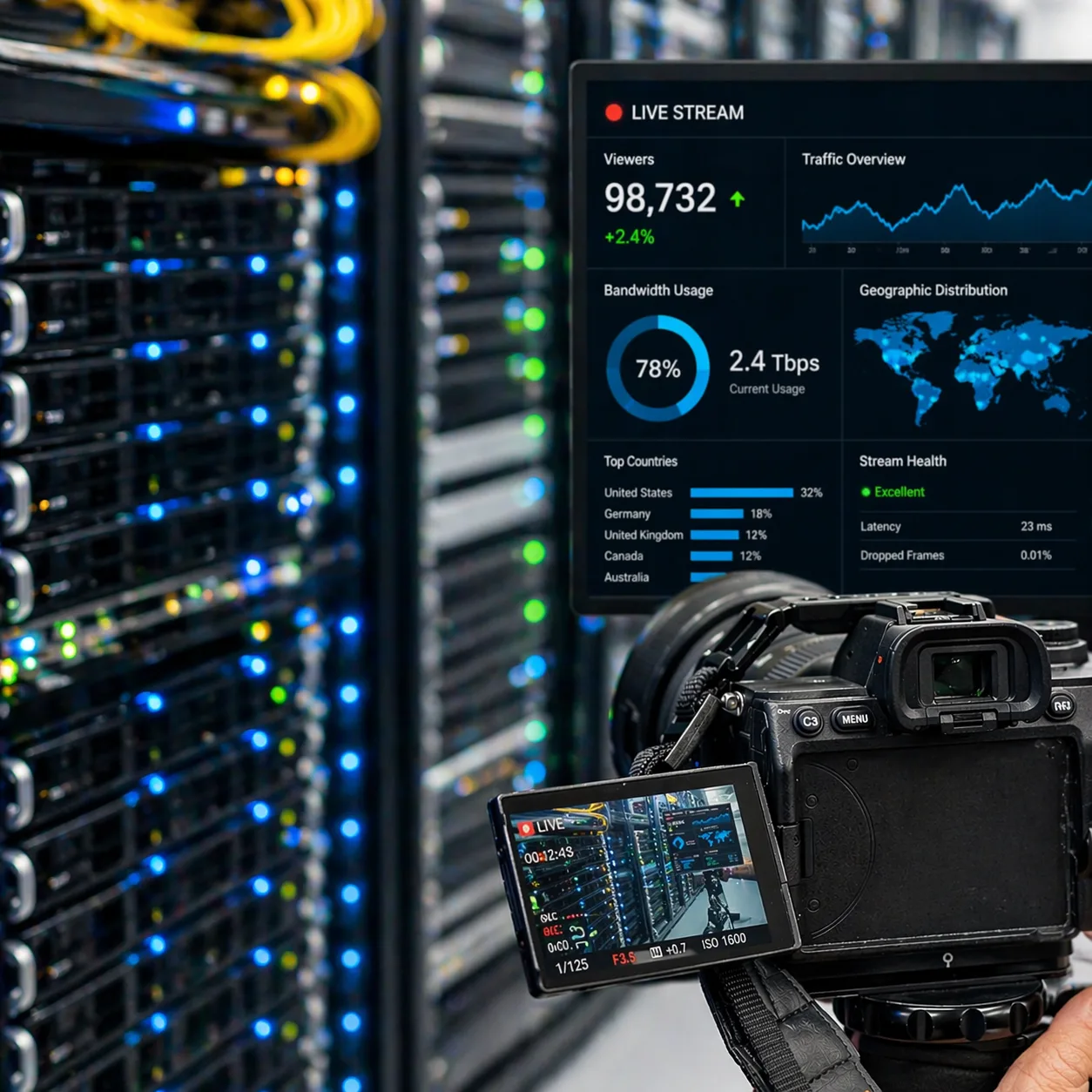
Are you tired of constantly monitoring your server's data usage, terrified of the impending invoice at the end of the month? In 2026, digital consumption is heavier than ever. Users expect flawless 4K video streaming, massive file downloads, and instantaneous media delivery. However, serving this content to a global audience requires a staggering amount of data transfer. If you rely on traditional cloud hosting providers, this data transfer often comes with crippling overage fees.
To build a sustainable, scalable media platform, you need a different approach. You need the freedom of unmetered bandwidth. In this guide, we will explore how you can maximize an unmetered Virtual Private Server (VPS) to host high-traffic streaming services and heavy-data workloads without breaking the bank.
The Hidden Costs of Modern Media Delivery
When you launch a new application, you meticulously calculate the costs of CPU cores, RAM, and storage space. Yet, many system administrators drastically underestimate the cost of data egress—the data leaving your server to reach the end-user. As your audience grows, your egress costs skyrocket. Major cloud providers often lure businesses in with inexpensive compute instances, only to charge exorbitant rates per gigabyte of outbound traffic.
Decoding the “Unmetered” Promise
What exactly does “unmetered bandwidth” mean? It is a common misconception that unmetered means “infinite speed.” Rather, unmetered means that your provider does not track or cap the total volume of data you transfer in a billing cycle. Instead, you are provided with a specific port speed (for example, 1 Gbps). You can utilize that connection 24/7 at maximum capacity, and your monthly bill will never change.
For example, a 1 Gbps unmetered port can theoretically deliver more than 300 TB of data per month if fully utilized. This makes unmetered VPS infrastructure ideal for bandwidth-heavy workloads such as video streaming, file distribution, and large-scale media platforms.
This predictable pricing model is extremely valuable for businesses that rely on consistent, high-volume media delivery.
Why Traditional Hosting Fails for High-Volume Media
Running large-scale media delivery on metered infrastructure without CDN optimization can quickly become expensive.
The Bandwidth Overage Trap
Imagine you host a moderately successful podcast or a localized video streaming platform. A single viral episode can generate terabytes of data transfer in a matter of hours. On a metered plan, once you exhaust your monthly allowance (which is often a meager 1TB or 2TB), you are billed for every additional gigabyte. This creates a risky financial scenario where success actually penalizes your business. You are forced into a corner: either shut down your service during a traffic spike or absorb a massive, unexpected financial loss.
Calculating Your True Monthly Transfer Needs
Let us look at the mathematics of media delivery. A standard high-definition (1080p) video stream consumes roughly 1.5 to 3 gigabytes of data per hour. If you have just one hundred concurrent users watching a one-hour video, you have instantly consumed up to 300 gigabytes of bandwidth. Over a 30-day month, even a modest user base can easily push your data transfer well past 10 or 20 terabytes. Unmetered bandwidth entirely removes this mathematical anxiety, allowing you to focus on growth rather than strict data rationing.
Architecting a Media Streaming VPS
While unmetered bandwidth is the foundation of a high-traffic server, your underlying hardware must be capable of feeding that network port. A fast connection is useless if your storage drives cannot read the data quickly enough.
Leveraging NVMe SSDs for Instant Content Retrieval
Traditional Hard Disk Drives (HDDs) and even older SATA Solid State Drives (SSDs) struggle to keep up with the demands of concurrent media streaming. When hundreds of users request different video files simultaneously, the server's storage must perform rapid, random read operations. This is where Enterprise NVMe SSDs become absolutely critical. NVMe drives connect directly to the server's PCIe lanes, delivering exponentially higher Input/Output Operations Per Second (IOPS) than legacy storage. By pairing ReadyServer's NVMe infrastructure with unmetered bandwidth, your VPS can retrieve and broadcast massive media files instantly, eliminating buffering for your end-users.
Optimizing Video Delivery with Proper Software Configurations
Hardware is only half of the equation. To maximize your unmetered connection, you must deploy efficient streaming protocols. Avoid forcing users to download massive MP4 files. Instead, utilize HTTP Live Streaming (HLS) or Dynamic Adaptive Streaming over HTTP (DASH). These protocols segment your media into small chunks and automatically adjust the video quality based on the viewer's internet speed. By running highly optimized web servers like Nginx configured specifically for video caching, you ensure that your VPS utilizes its unmetered port as efficiently as possible.
Deploying Heavy-Data Workloads on Your Server
An unmetered VPS is not solely for streaming video. It serves as the perfect engine for a variety of bandwidth-intensive applications.
Setting Up a Private CDN Edge Node
If you run a global application, you can deploy an unmetered VPS as a regional edge caching node for your application. By caching your heavy static assets (images, CSS, JavaScript, and localized videos) on a ReadyServer VPS, you can serve the entire Asia-Pacific region at lightning speeds. The unmetered bandwidth ensures that even during massive regional traffic spikes, your CDN node will deliver assets reliably without incurring overage fees from traditional, pay-as-you-go CDN providers.
Expanding Beyond Media: Gaming and AI Workloads
Media delivery is just one piece of the puzzle. Continuous, high-volume data transfer is also a prerequisite for hosting expansive multiplayer environments. Furthermore, as businesses integrate localized artificial intelligence, syncing datasets and model artifacts can require significant bandwidth. You can learn more about deploying these advanced architectures in our comprehensive article, Running Your Own Private AI: Hosting Llama/Mistral Models on a VPS. Both of these use cases perfectly illustrate the necessity of an unmetered network environment.
Securing and Managing Your High-Traffic Infrastructure
When you open the floodgates to high-volume traffic, you must maintain absolute visibility over your server's performance.
Monitoring Throughput via Mobile Management
How do you know if you are maximizing your unmetered port or if you are nearing the capacity of your server's CPU? You need real-time telemetry. With ReadyServer's proprietary mobile application, you are never blind to your server's health. You can monitor live network throughput, CPU utilization, and RAM consumption directly from your smartphone. If a viral media event pushes your VPS to its absolute limits, you can seamlessly scale your compute resources from the palm of your hand, ensuring your media streams remain uninterrupted.
Conclusion
In the modern digital landscape, bandwidth limits are an artificial barrier to your business's growth. By deploying your heavy-data workloads on a VPS equipped with enterprise-grade NVMe SSDs and strictly unmetered bandwidth, you achieve total financial predictability. You empower your platform to scale dynamically, serve high-definition media flawlessly, and accommodate massive user influxes without the fear of hidden overage penalties.